

Vein Evaluation for Hospitals & Outpatient Centers
See More. Assess Better. Start Smarter.
When vascular access matters, confidence matters.
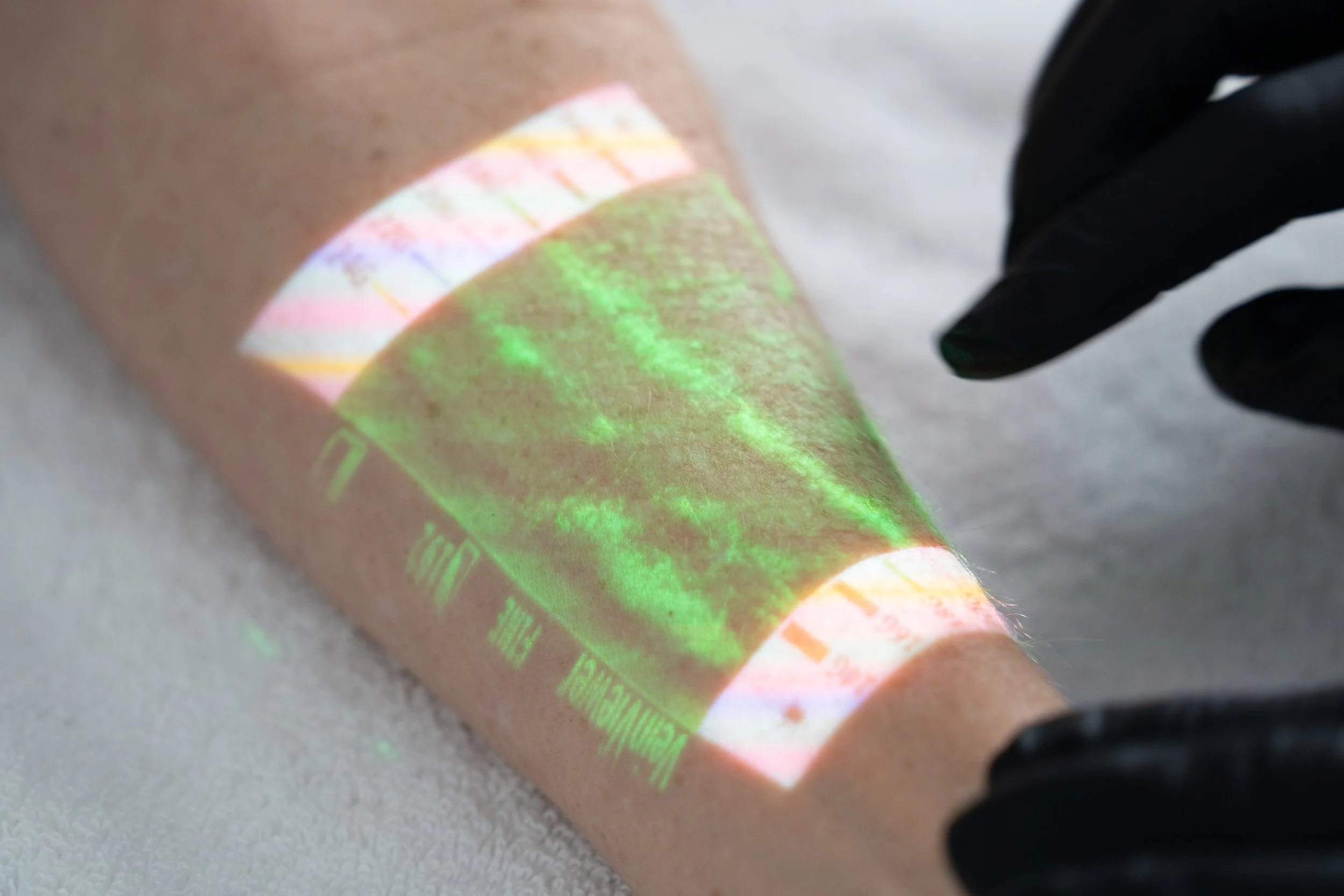
VeinViewer® Vision2 with CathCompass™ helps clinicians evaluate veins before, during, and after access. It supports better peripheral IV decisions across hospitals, outpatient centers, labs, oncology, pre-op, anesthesia, and general care.
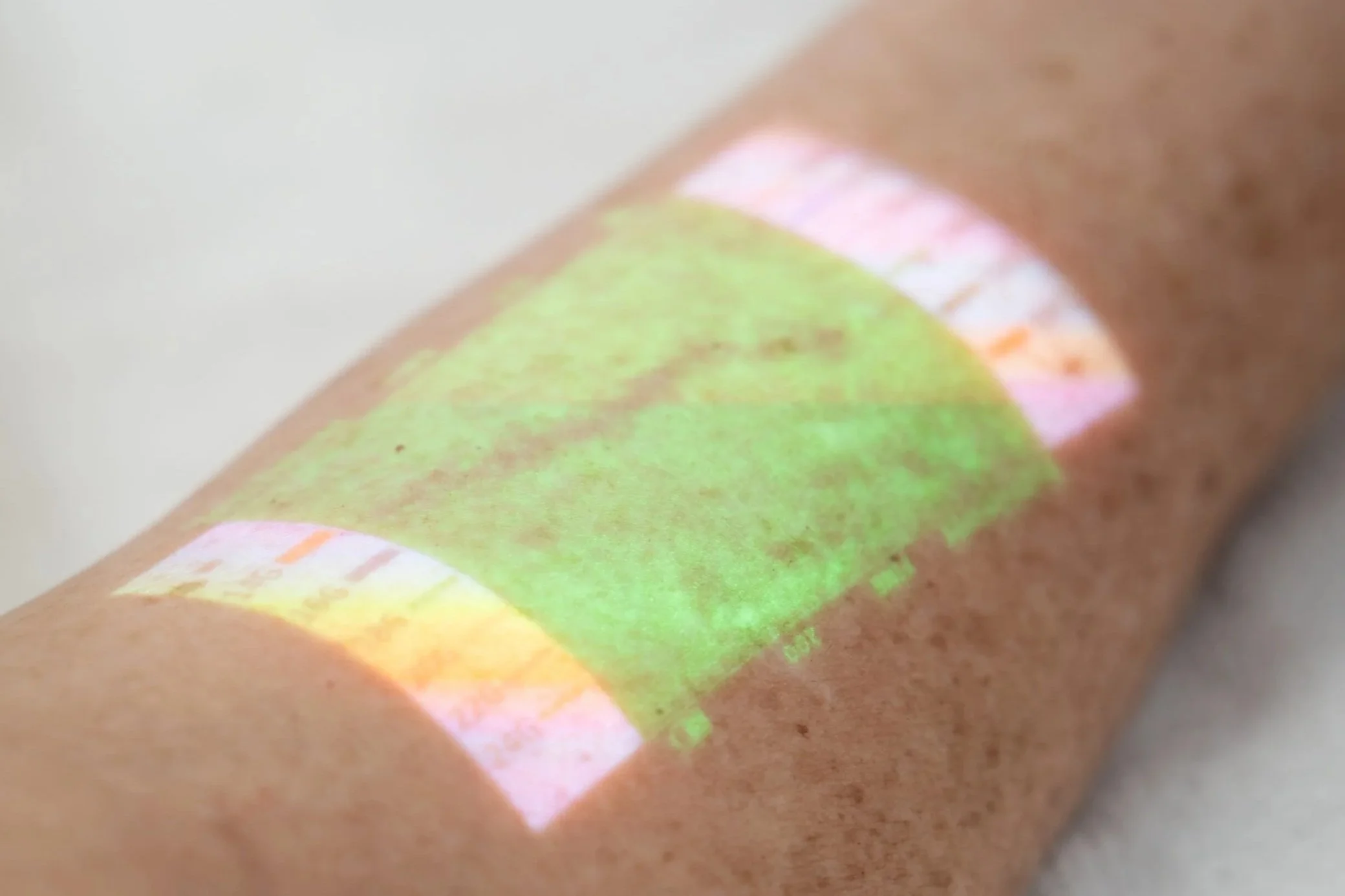
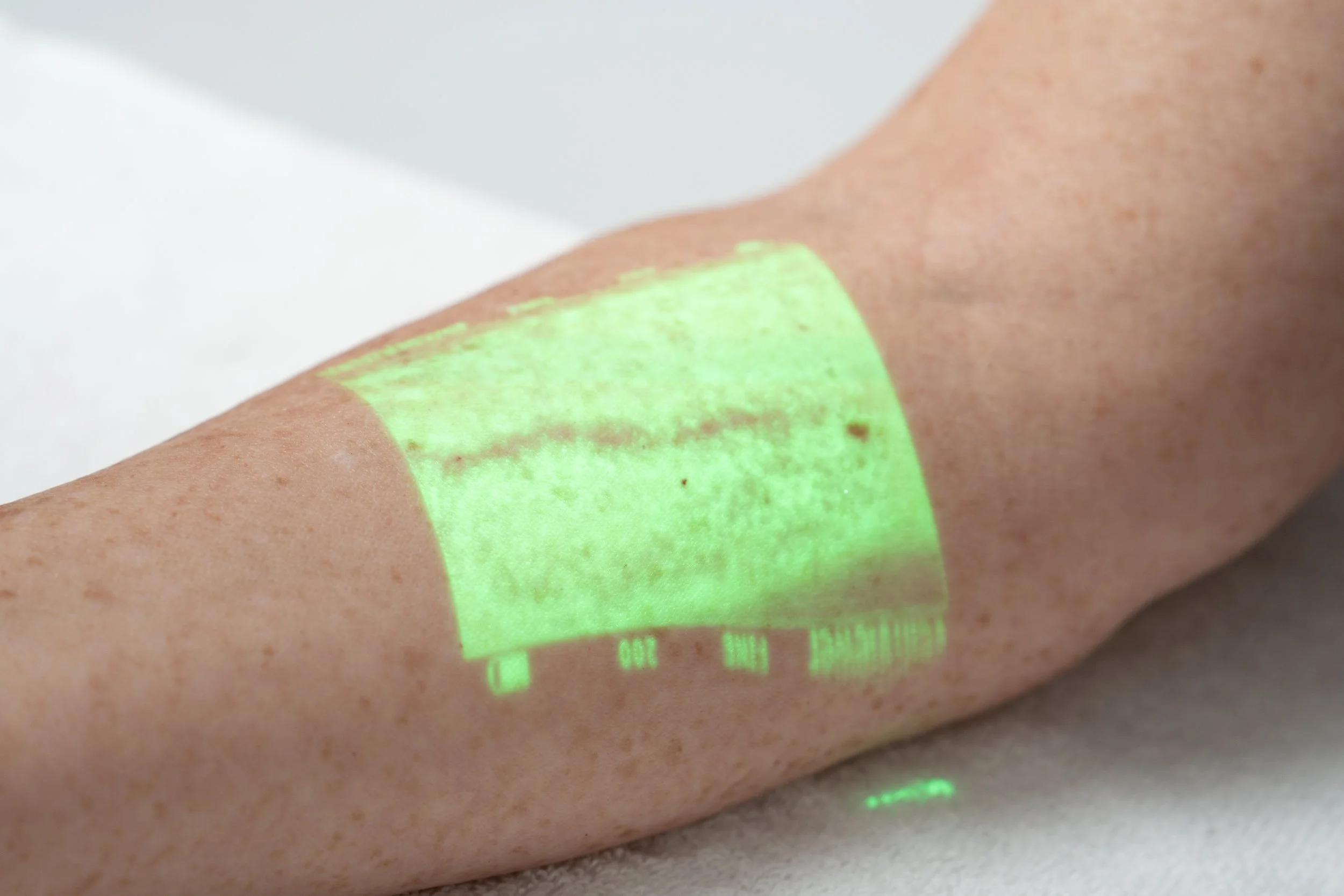
VeinViewer® helps clinicians see peripheral veins, assess vessel patterns, and identify valves and bifurcations in real time. CathCompass™ exclusively by VeinViewer® adds a built-in PIVC catheter sizing reference graphic to support smarter catheter-to-vein ratio decisions.
Why VeinViewer® Vision2
-
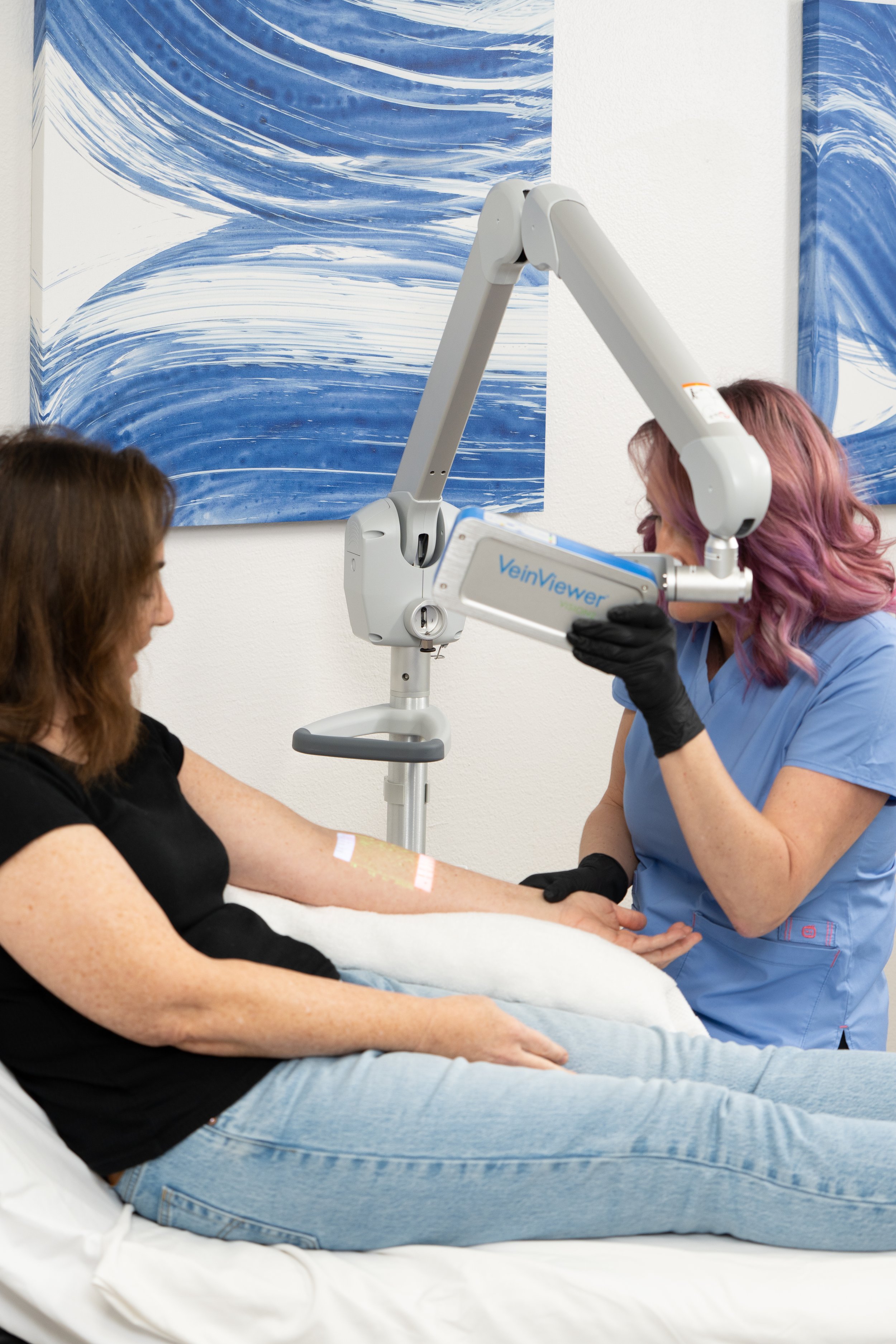
Vision2 is designed for high-demand clinical environments. Its hands-free imaging, articulating arm, and flexible wrist joint support easier positioning at the bedside and across departments without the risk of misplacing a handheld device.
-
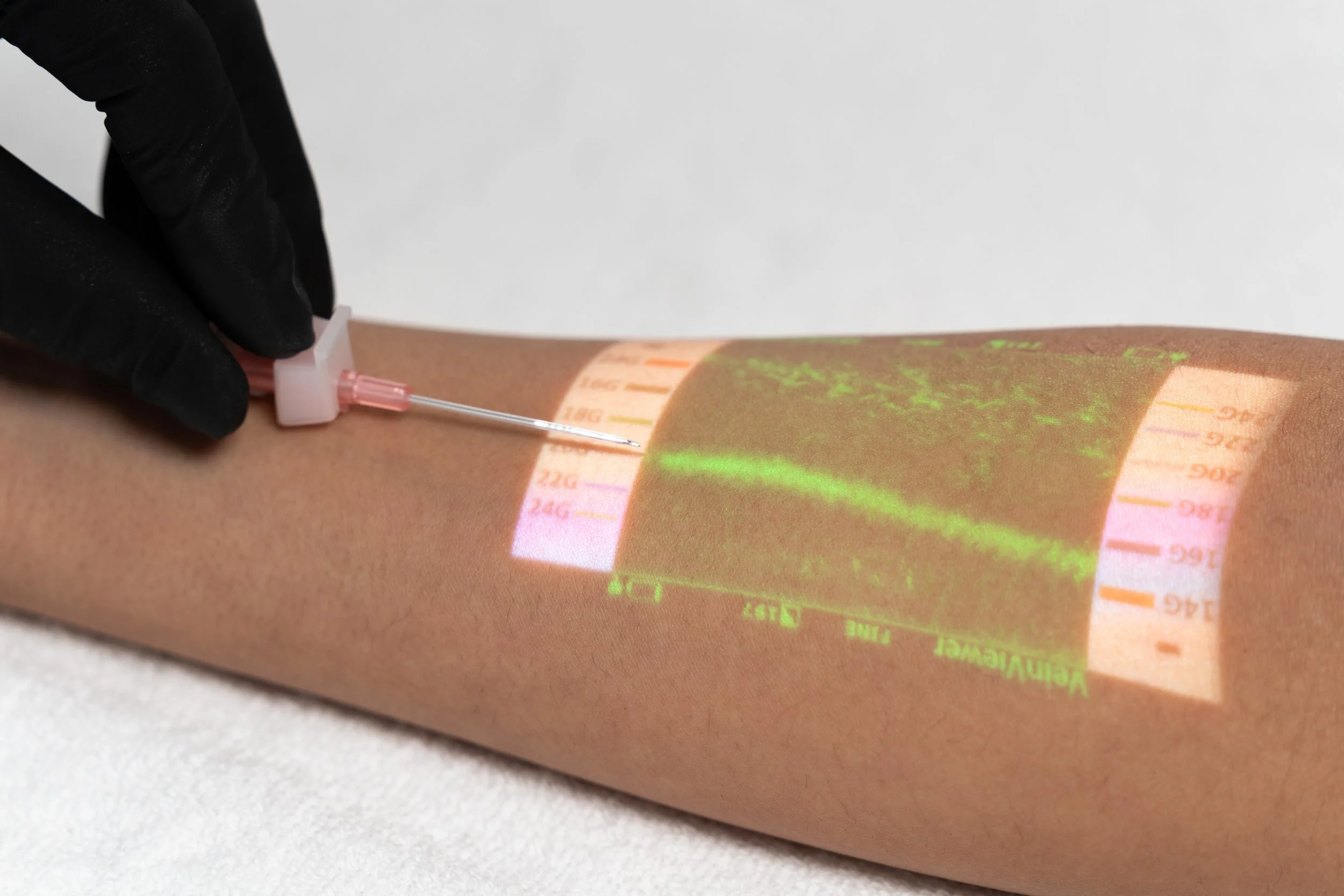
VeinViewer® supports vein assessment before access, during access, and after access. It helps clinicians evaluate site selection, vessel patterning, refill, flushing, and hematoma formation.
-
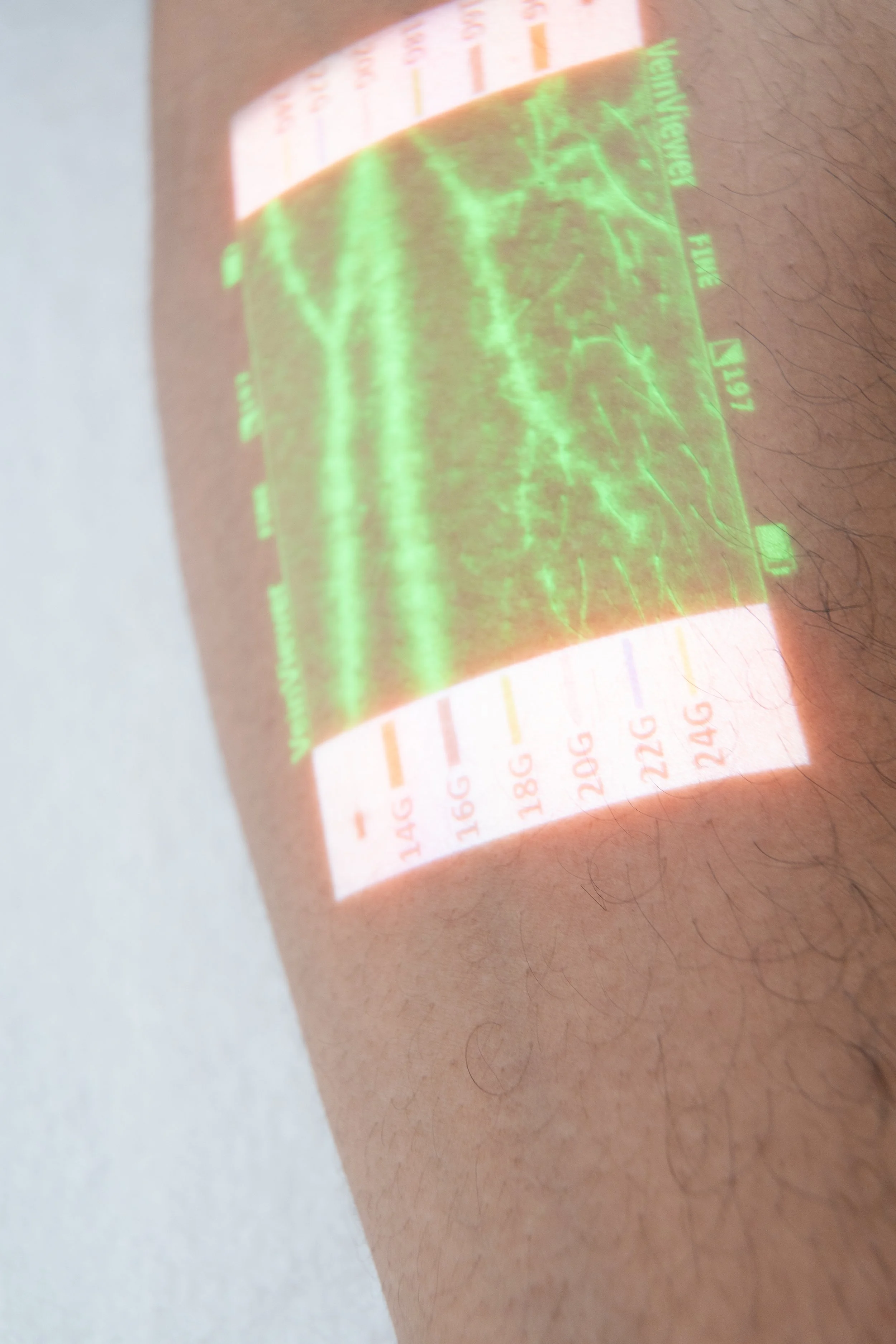
CathCompass™ uses the same NIR technology with a color-coded catheter sizing guide. Clinicians can compare the chosen vein to standard catheter gauges and make more confident catheter-to-vein ratio decisions. When the correct catheter size is chosen, first-stick success increases to 92% (H.J. van Loon, F., et al., The impact of catheter to vein ratio on peripheral intravenous cannulation success, a post-hoc analysis; PloS One 2021; 16(5): e0252166)
-
Vision2 includes imaging modes such as TriColor, Inverse, Fine Detail, Resize, MaxBright, and image capture to help optimize visualization across a wide range of patients.
Why CathCompass™ Matters
CathCompass™ helps clinicians:
Evaluate the vessel before choosing a catheter
Better align catheter selection with vein size
Support peripheral IV decisions in difficult-access patients
Build confidence in catheter-to-vein ratio evaluation
Add a visual check to PIVC planning
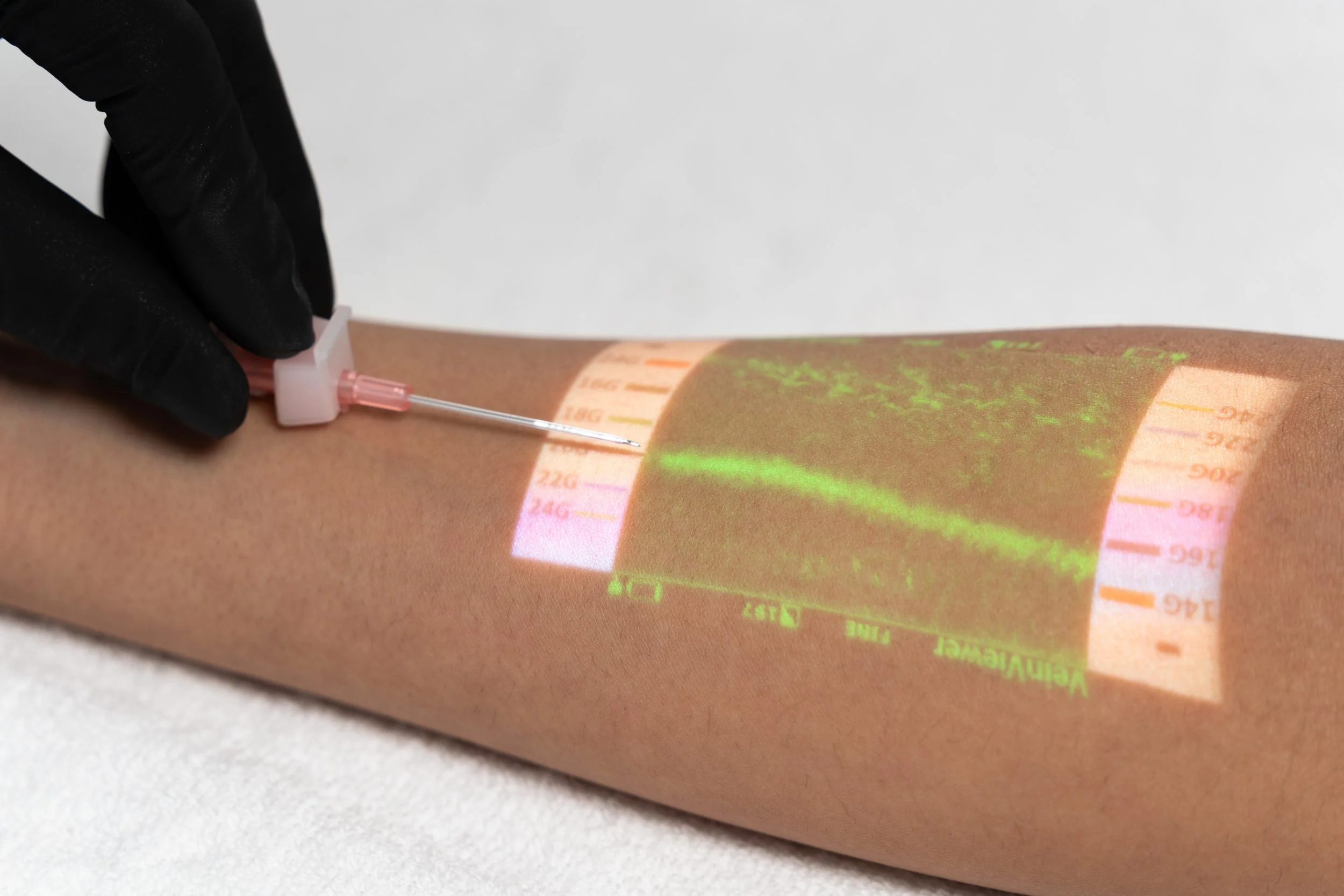
Choosing a vein is only part of the decision. Choosing the right sized catheter for that vein is just as important.
CathCompass™ exclusively by VeinViewer® helps clinicians assess vein size against catheter gauge using a built-in sizing graphic. It is designed to support catheter-to-vein ratio evaluation and more confident peripheral IV planning, especially in difficult access cases.

Why VeinViewer® Vision2
Hospitals
VeinViewer® Vision2 with CathCompass supports departments where difficult access, time pressure, and patient experience all matter.
-
Supports routine blood draws by helping clinicians identify more potential access sites and better assess veins for standard venipuncture.
-
Helps visually confirm patency of the IV to support access confidence and vein preservation for patients who require repeat infusions.
-
Supports earlier peripheral assessment and may help reduce unnecessary escalation by visually confirming IV patency with the ability to see IV flushing in real time.
-
Helps support faster IV starts in settings where delays affect throughput and OR economics.
Outpatient Centers & ASCs
Outpatient centers and ASCs (Ambulatory Surgical Centers) need vascular access that supports speed, confidence, and schedule compliance.
-
Helps clinicians evaluate veins quickly when dehydration from fasting or prep makes access more challenging.
-
Supports teams that need speed, positioning flexibility, and a more efficient start process.
-
Helps clinicians assess veins across recurring visits and a wide range of patient types (NICU, Pediatrics, Geriatric, Venous Compromised Individuals).
Benefits Beyond the Stick

Pre-Access
Reveal more potential access sites
Support vein selection with real-time visualization
Help assess difficult venous access
During Access
Support an eyes-on-patient technique
Add catheter sizing guidance with CathCompass™
Help clinicians stay focused on placement
Post-Access
Assess IV patency through fluid flushing visualization
Detect hematoma formation as it develops
Support documentation with image capture
How It Affects ROI
Difficult venous access is not just a clinical challenge. It is a cost challenge.
Repeat attempts add time, frustration, and downstream inefficiency. Better peripheral assessment can support faster access, better throughput, fewer repeat sticks, and less unnecessary escalation to more invasive alternatives.
VeinViewer® Supports ROI by Helping Facilities:
Reduce repeat attempts
Improve efficiency in difficult-access cases
Support pre-op and outpatient throughput
Reduce avoidable escalation to PICCs
Improve patient satisfaction and experience by offering a level of service unique to your practice.
Make more confident PIV catheter selections with CathCompass™
Why the Economics Matter
When IV access delays procedures, the operational impact adds up fast. Improving peripheral access earlier can support both clinical efficiency and cost control.

Resources and Real-World Proof
VeinViewer® is available in two configurations so you can match the device to your space and workflow.

Navigating CathCompass: A Webinar Featuring Sarah Chapman, RN
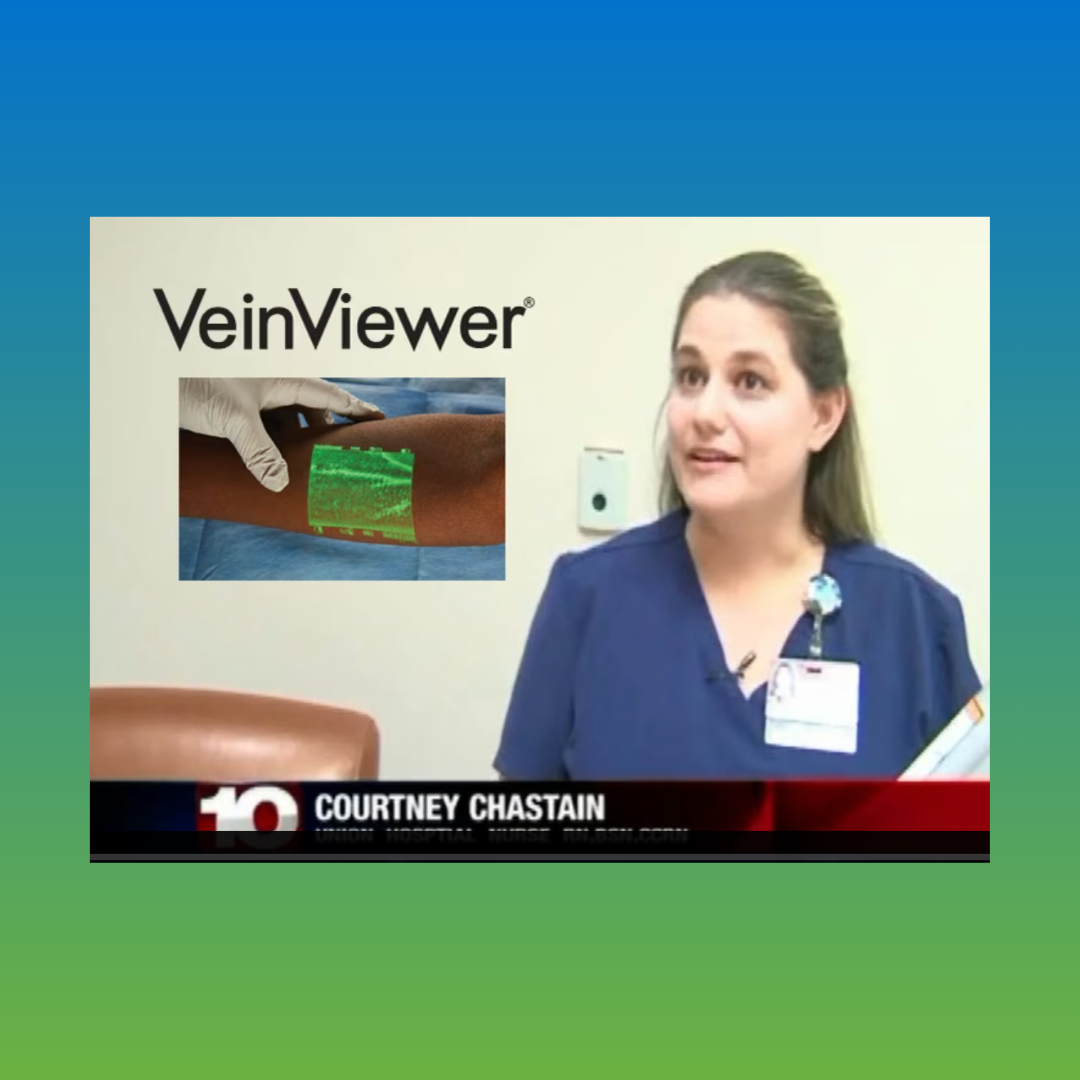
Union Hospital

Howard County Hospital uses VeinViewer
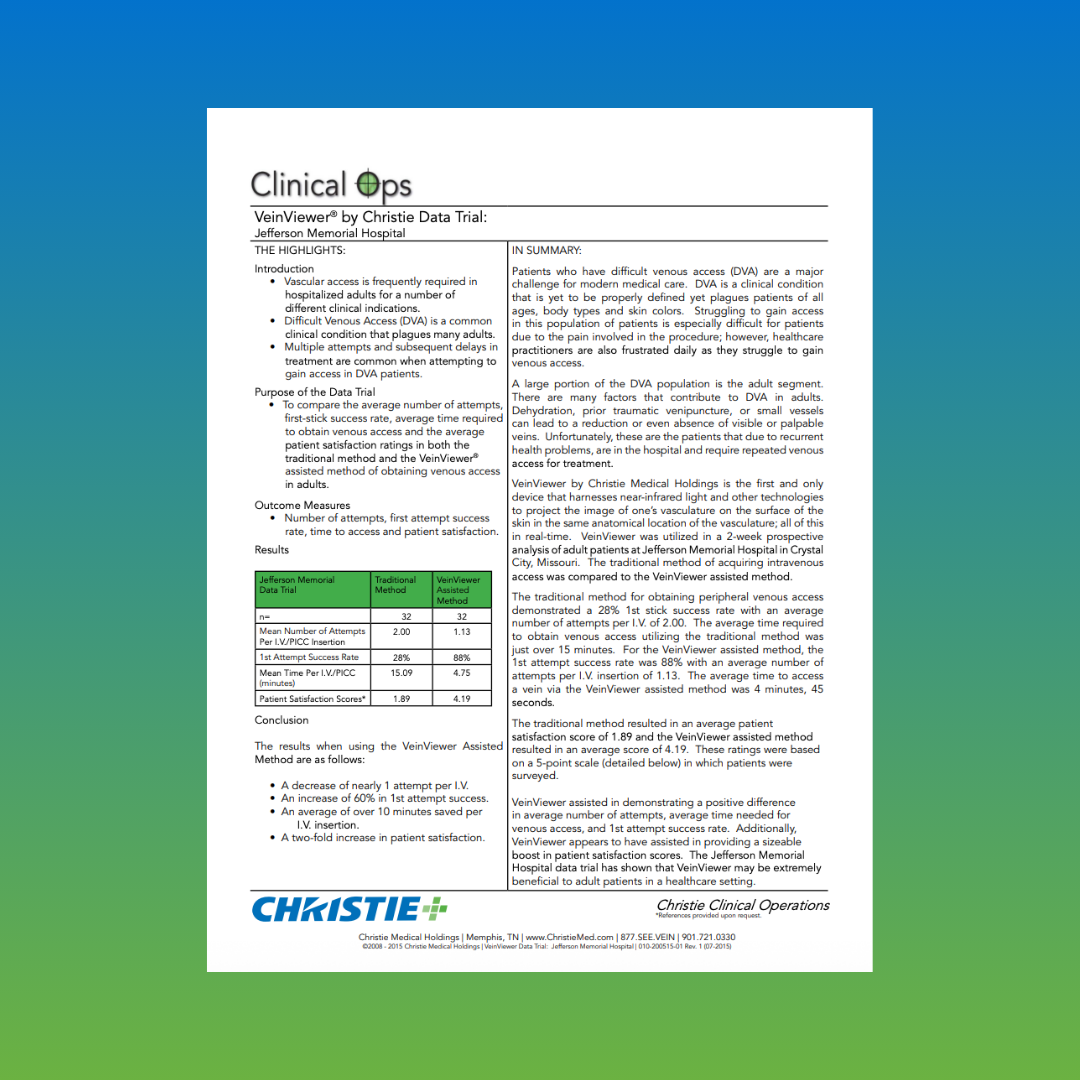
VeinViewer® and a positive difference in average number of attempts.
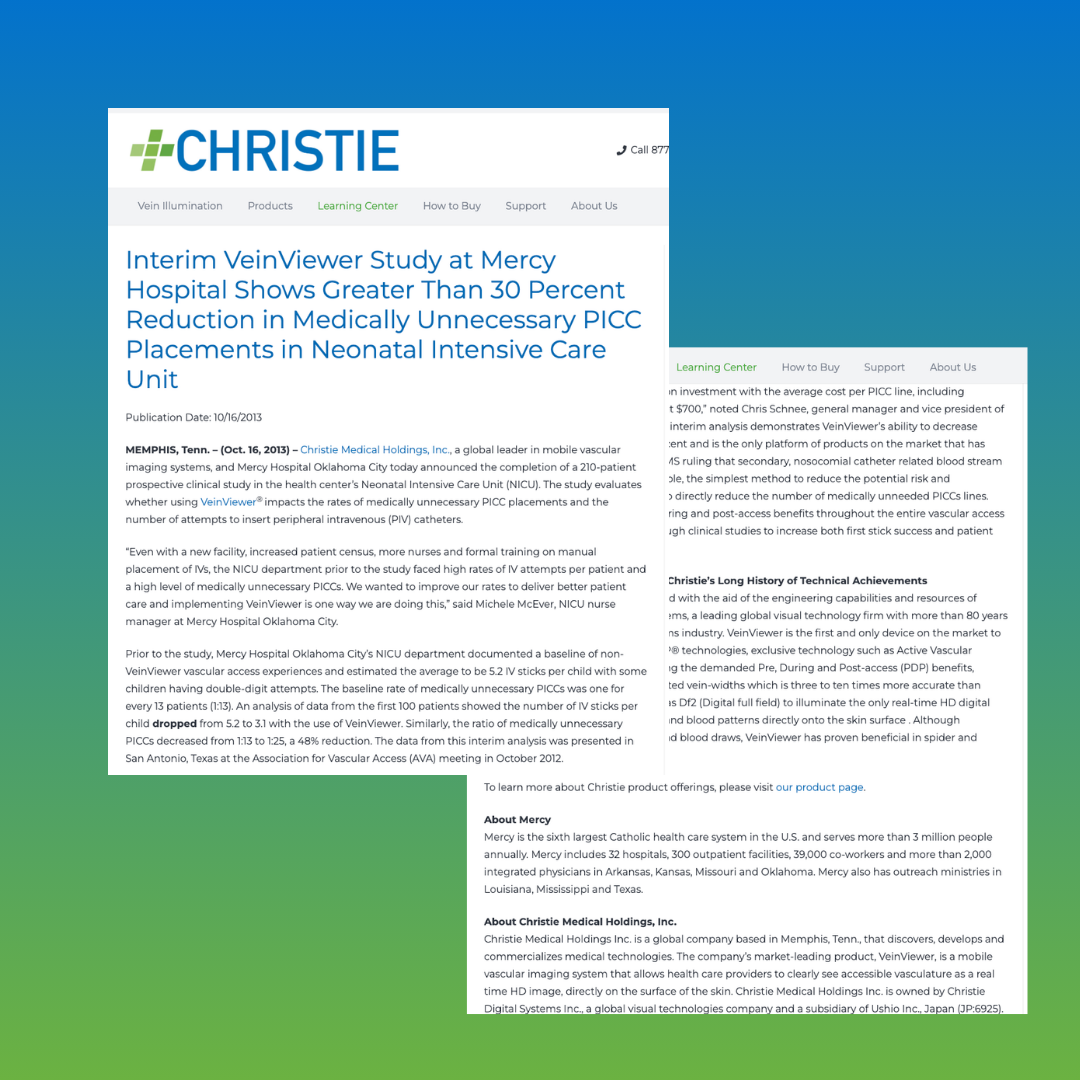
VeinViewer reduced unnecessary PICC lines placed in NICU patients by more than 30%*.
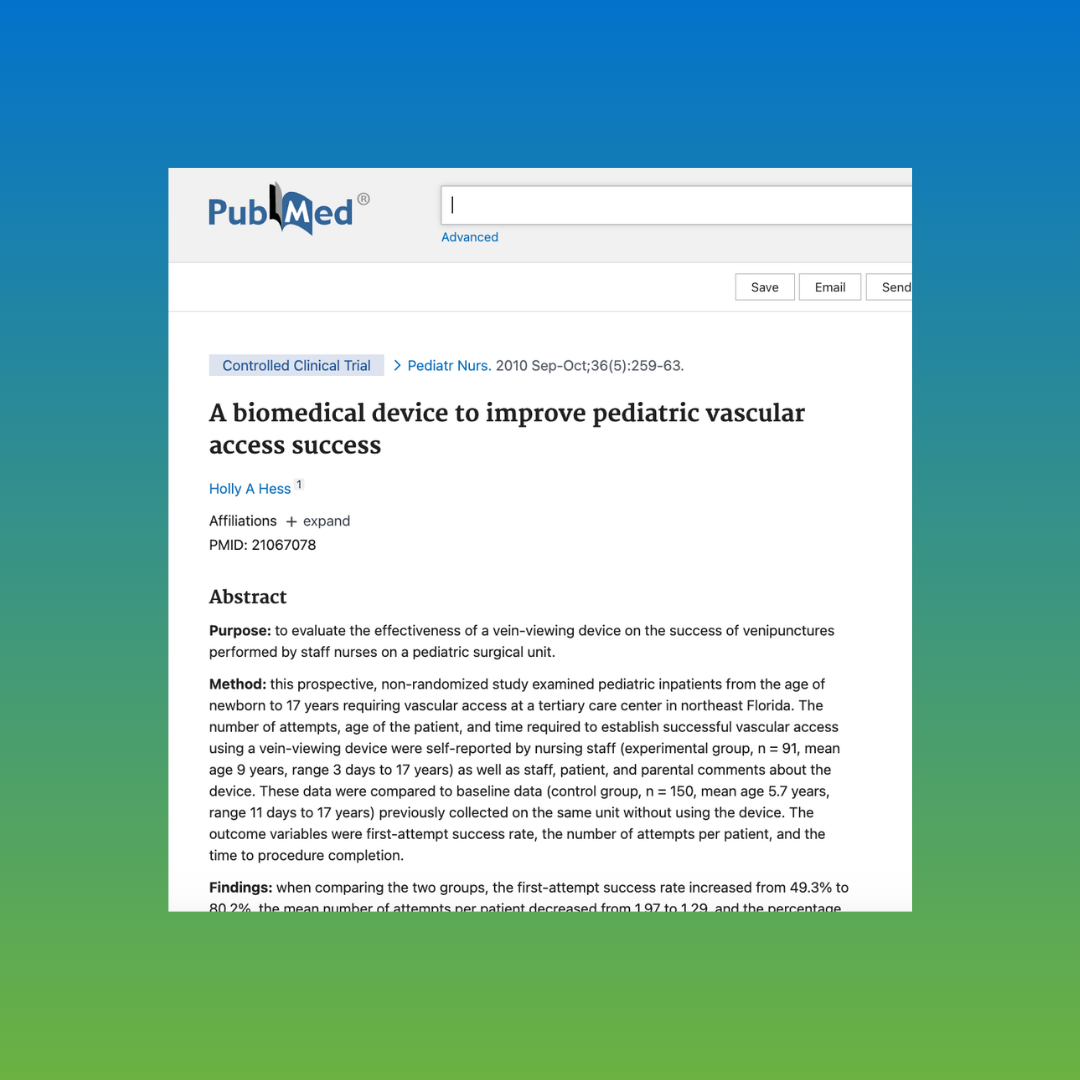
The use of the vein viewing device significantly improved the first attempt venipuncture success rate.
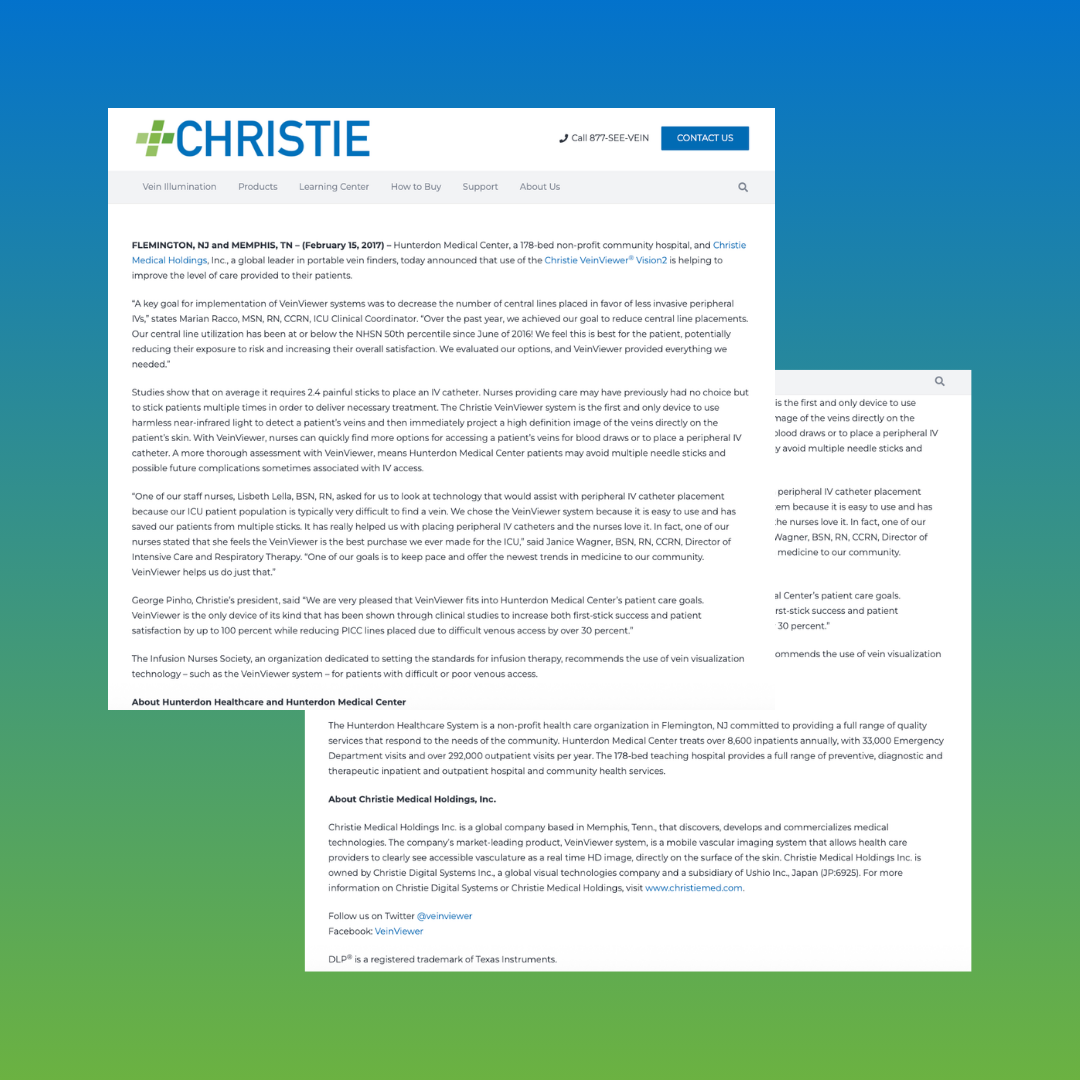
Hunterdon Healthcare highlights patient benefits tied to reducing sticks and PICCs
Pullman Regional Hospital Adoptions Christie VeinViewer
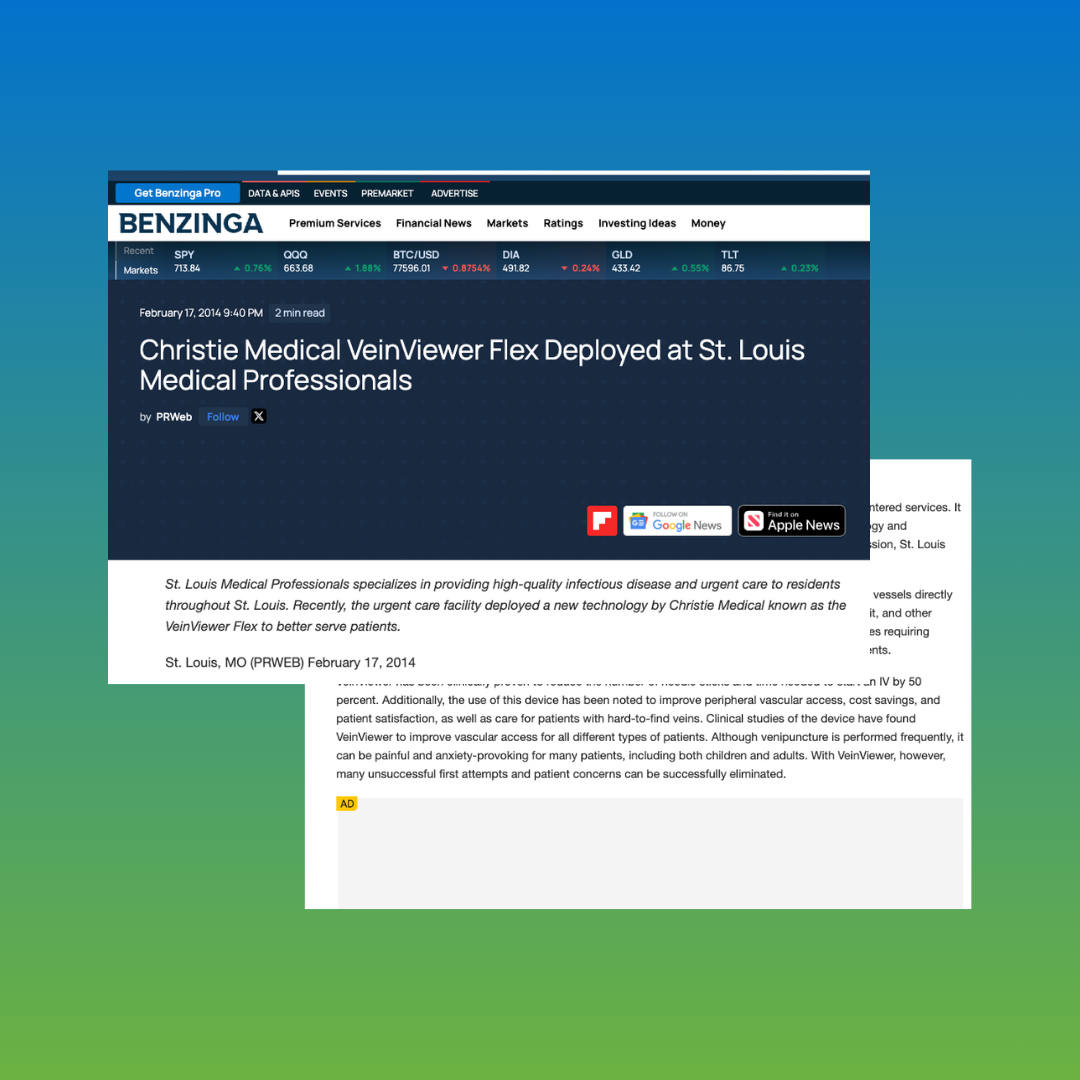
St. Louis Medical Professionals
Collaboration with B. Braun focused on improving peripheral IV access success
North Richland Hills
Elevate Vein Evaluation Across Your Facility
From routine blood draws to PIVC evaluation in difficult-access patients, VeinViewer® Vision2 with CathCompass™ helps clinicians assess veins with more confidence, support better catheter decisions, and improve efficiency across care settings.